JMTC EASY LOGISTICS · 01

When can I receive
my imported cargo?

LCL cargo shares a container with other shipments. Follow nine stages and 18 comic panels to see how warehouse and office tasks connect.

Customs and tax conditions + cargo release + physical readiness

Delivery is arranged once release conditions are met. Matching numbers below identify related work, not tasks that must start or finish at the same time.

1 · Stages 01–03

Arrival preparation and port handling

Enlarge the original Korean comic
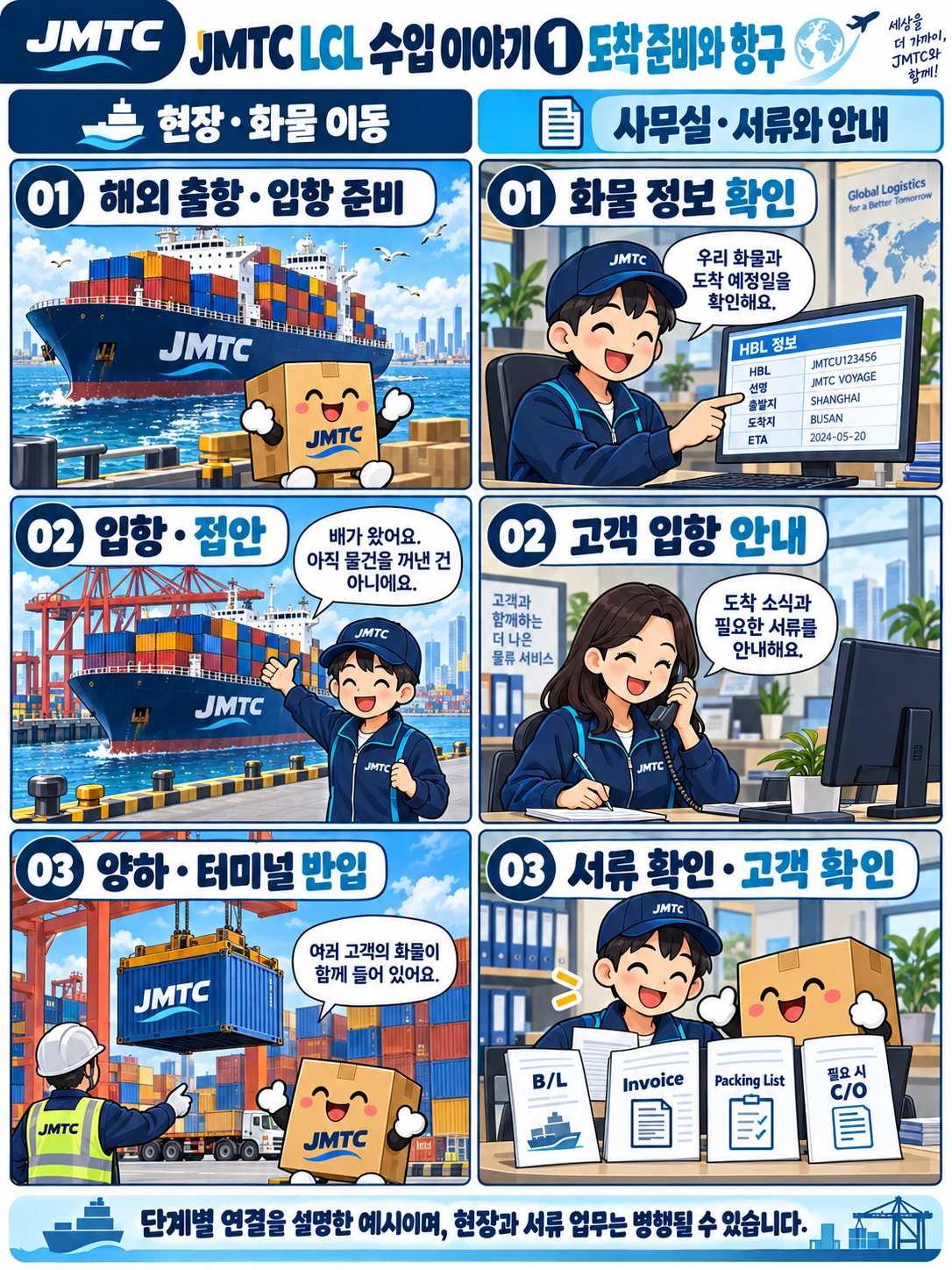
Arrival preparation and port handling. Left: physical LCL handling; right: related office work. Translated stage-by-stage explanations follow below.
Original Korean comic. Left: warehouse; right: office. Read matching numbers together. Document numbers and dates are examples; sequence and timing vary by declaration and warehouse conditions.
1 · Download original comic

01Sailing information and arrival preparation

Physical handling · How cargo moves

Small shipments for several customers travel together in one container. This is LCL shipping.

Office · JMTC and customs-broker tasks

JMTC checks the overseas partner’s shipment information: house B/L, vessel and voyage, ETA, package count and weight.

How the two workflows connect

Sailing and expected arrival information starts the customer update. ETA is an estimate and may differ from actual arrival.

What the customer should check Send importer details and available shipping documents in advance.
02Arrival, berthing and customer updates

Physical handling · How cargo moves

Arrival means entering port; berthing means coming alongside. A vessel may wait for a berth after arrival.

Office · JMTC and customs-broker tasks

We check actual arrival and schedule changes, then advise the customer of documents and next steps.

How the two workflows connect

An arrival notice is not a confirmed delivery date. The container may still be on board.

What the customer should check Tell us any urgent delivery deadline in advance so we can check what can be confirmed.

03Discharge, terminal receipt and document checks

Physical handling · How cargo moves

A crane discharges the container from the vessel into the terminal, where it awaits transfer. Individual boxes are still inside the shared container.

Office · JMTC and customs-broker tasks

We check the B/L, invoice, packing list and C/O where required, comparing descriptions, values, quantities and importer details. Gaps are checked with the customer.

How the two workflows connect

Terminal receipt of the container does not mean individual LCL warehouse handling is complete. Document checks may start earlier.

What the customer should check Check that documents match the goods. Prepare origin evidence when required, including for an applicable FTA claim.

2 · Stages 04–06

Warehouse handling and import declaration

Enlarge the original Korean comic
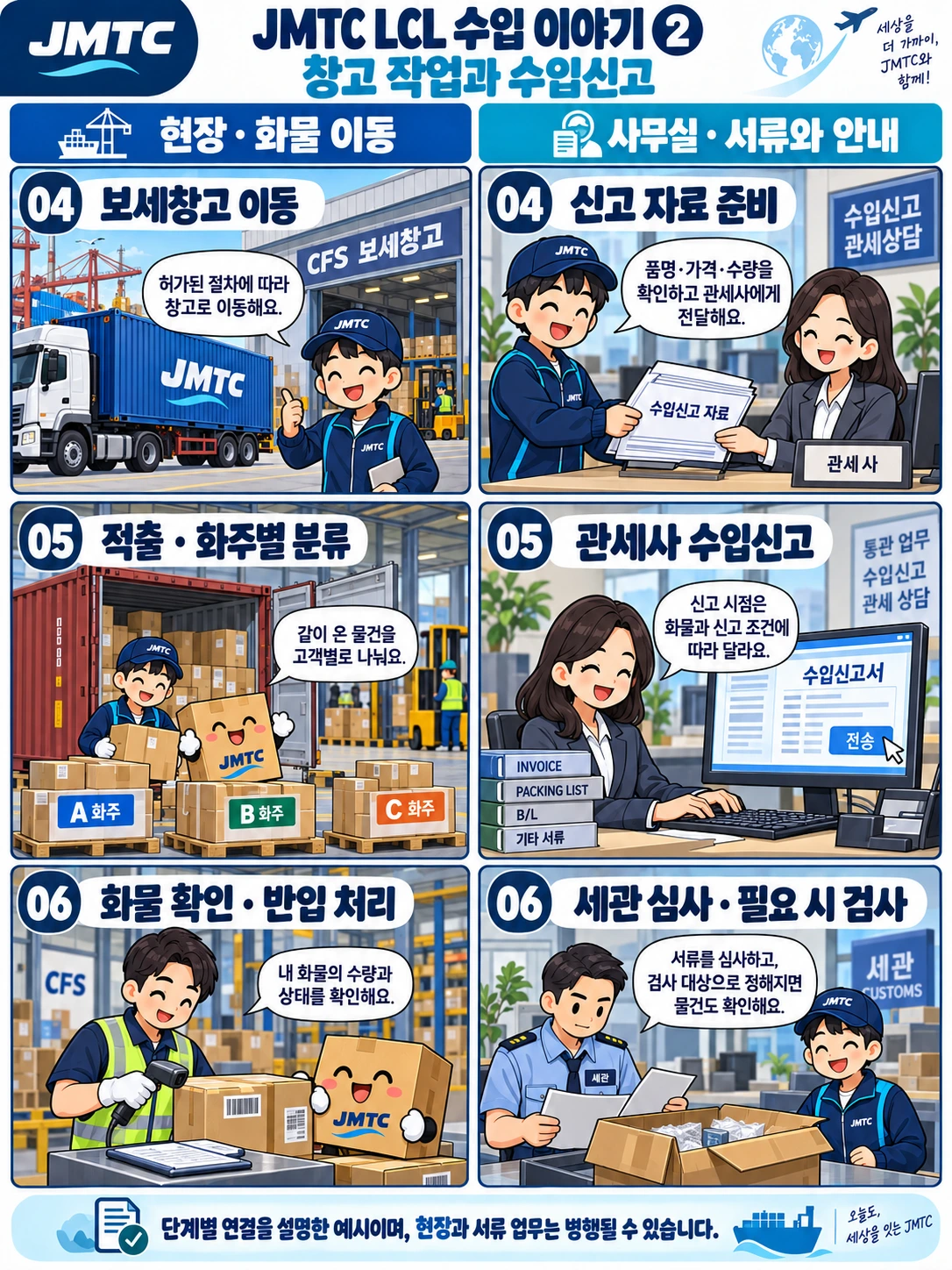
Warehouse handling and import declaration. Left: physical LCL handling; right: related office work. Translated stage-by-stage explanations follow below.
Original Korean comic. Left: warehouse; right: office. Read matching numbers together. Document numbers and dates are examples; sequence and timing vary by declaration and warehouse conditions.
2 · Download original comic

04Bonded warehouse transfer and declaration preparation

Physical handling · How cargo moves

The container moves to a CFS or bonded warehouse for separation. Bonded transit procedures apply where needed; handling may also take place inside the terminal.

Office · JMTC and customs-broker tasks

We confirm warehouse and devanning schedules, pass verified documents to the customs broker, and prepare additional classification, value or import-requirement information.

How the two workflows connect

Declaration preparation can follow the warehouse schedule, but the timing differs between shipments.

What the customer should check Please respond promptly to requests for product descriptions, composition or intended use.

05Devanning, shipment separation and import declaration

Physical handling · How cargo moves

Devanning means opening the container and unloading the goods. Shipments are separated using house B/Ls and marks, then checked for quantity and visible condition.

Office · JMTC and customs-broker tasks

The customs broker files the import declaration using confirmed information. A declaration number means filing has begun, not that clearance is complete.

How the two workflows connect

Pre-arrival declaration may be possible. Devanning is not always a prerequisite; physical and documentary work can run in parallel.

What the customer should check Respond to declaration checks or requests for corrections. Discuss any changes to descriptions or values with the person in charge.

06Individual cargo receipt, review and inspection

Physical handling · How cargo moves

The warehouse checks receipt, count and condition of each separated shipment. Shortage, damage or document discrepancies need investigation.

Office · JMTC and customs-broker tasks

Customs reviews the declaration. If selected for inspection, we coordinate warehouse preparation and await results. Documentary checks may apply even without physical inspection.

How the two workflows connect

An inspection requires physical access to the goods. Quarantine, certification or other import requirements may also apply.

What the customer should check Confirm inspection and correction requirements. No physical inspection does not mean immediate warehouse release.

3 · Stages 07–09

Clearance checks and delivery

Enlarge the original Korean comic
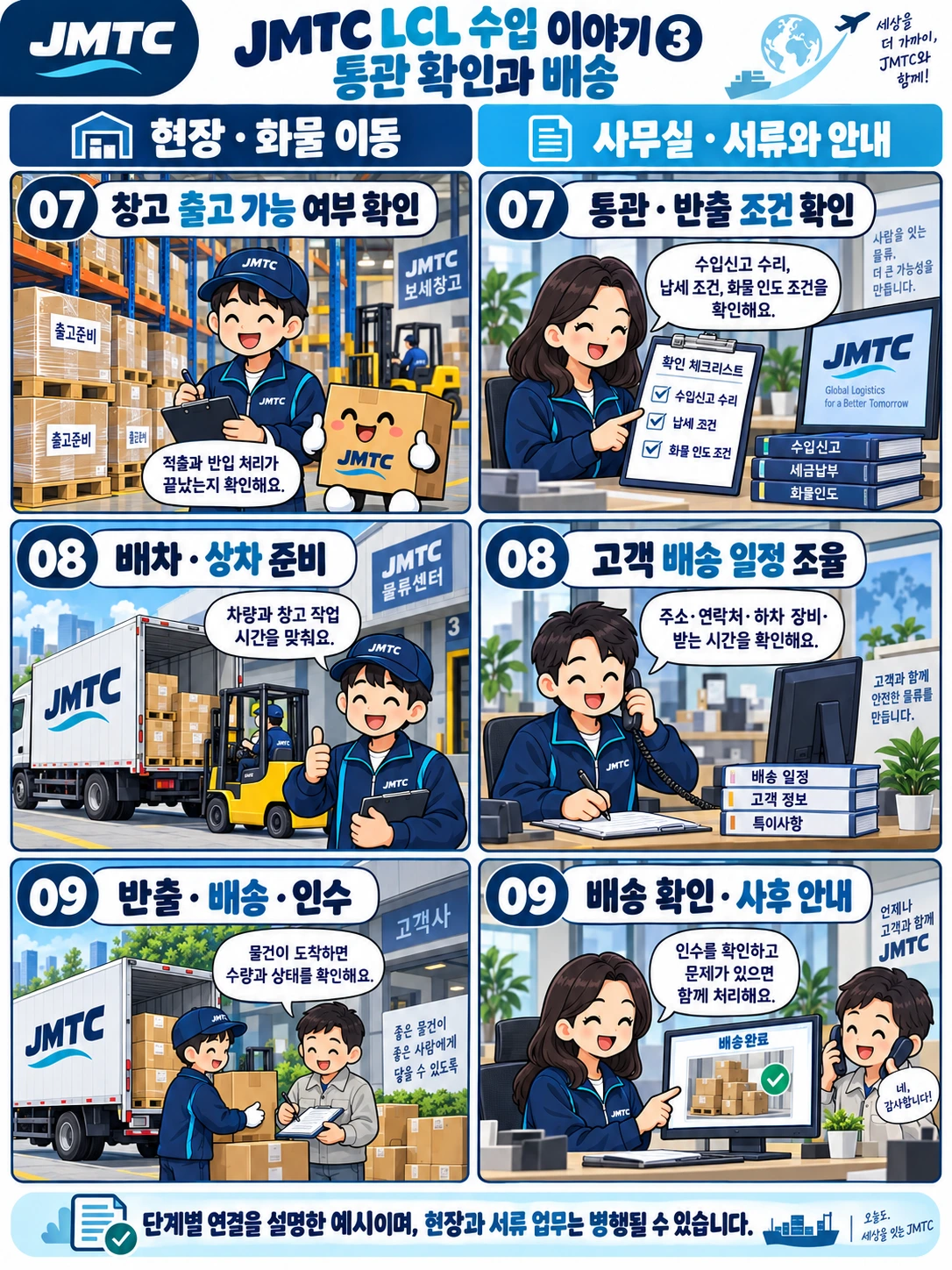
Clearance checks and delivery. Left: physical LCL handling; right: related office work. Translated stage-by-stage explanations follow below.
Original Korean comic. Left: warehouse; right: office. Read matching numbers together. Document numbers and dates are examples; sequence and timing vary by declaration and warehouse conditions.
3 · Download original comic

07Customs clearance and cargo release conditions

Physical handling · How cargo moves

Check that the shipment is accessible and that devanning, receipt and required warehouse work are complete.

Office · JMTC and customs-broker tasks

We check customs acceptance and tax conditions, carrier or consolidator release requirements, any required D/O and agreed freight or storage payments.

How the two workflows connect

Customs clearance and cargo-release authorisation are separate checks. Tax timing varies; paying freight does not itself secure customs clearance.

What the customer should check Separate taxes from logistics charges and confirm the payee. Check original B/L surrender or other release arrangements as applicable.

08Truck dispatch, loading and delivery coordination

Physical handling · How cargo moves

We match truck availability to the warehouse release time and prepare suitable capacity, loading sequence and equipment.

Office · JMTC and customs-broker tasks

We confirm the delivery address, contact, receiving hours, access limits and unloading equipment with the customer.

How the two workflows connect

Truck planning can start early, but release requires customs, carrier and warehouse conditions to be met. A truck request is not a confirmed booking.

What the customer should check Prepare the unloading area and equipment. Warehouse cutoffs or truck availability may affect the delivery date.

09Warehouse release, delivery and receipt

Physical handling · How cargo moves

Release means cargo leaves the warehouse. It is loaded onto a truck, delivered and unloaded for the customer to receive.

Office · JMTC and customs-broker tasks

We follow release and delivery and confirm receipt. Reported damage or shortage is checked with the relevant parties using photographs and delivery records.

How the two workflows connect

Release means warehouse departure; receipt means delivery to the customer. UNI-PASS clearance status does not confirm final delivery.

What the customer should check Check the count and appearance on receipt. Record any issue with photos and the delivery receipt, and notify us promptly.

Three different milestones

“Customs cleared” and
“Out for delivery” are different.

Import declaration accepted

Customs has accepted the declaration. Warehouse operations, cargo release and truck readiness still need separate checks.

Warehouse release

The cargo has left its storage location. Further transit time is needed before it reaches the customer.

Delivered and received

The customer has physically received the cargo. Check quantity and visible condition when accepting it.

This is an example of a typical bonded-warehouse LCL flow. Terminal CFS work, pre-arrival declaration, inspection, quarantine and tax arrangements can change the order and timing.

A small logistics glossary

Logistics terms made simple

LCL · Less-than-container load
Several customers share one container. Their shipments must be separated after arrival.
CFS
A facility where LCL cargo is consolidated or unpacked and separated.
Commercial invoice
A trade document showing descriptions, unit prices and transaction values.
Packing list
A document showing package contents, quantities, weights and other packing details.
C/O · Certificate of origin
Evidence of origin, required depending on the transaction and any FTA claim.
D/O · Delivery order
An instruction to deliver cargo, separate from customs acceptance of an import declaration.
Bonded warehouse
A warehouse holding cargo under customs supervision.
Devanning
Unloading goods from inside a container.
Import declaration accepted
Customs has accepted the import declaration. It does not mean all delivery preparations are complete.
Warehouse release
Goods leave the warehouse once the release conditions are met.
Truck dispatch
Arranging the truck and schedule for cargo transport.
B/L · Bill of lading
A document containing ocean shipment information. Have the B/L number ready when contacting us.

“Cleared, but why hasn’t it arrived?”

Cargo may still be waiting for warehouse handling or a truck after clearance. Document corrections, inspection, quarantine and warehouse conditions can affect receipt.

Give JMTC your B/L number so we can check clearance status and release readiness together.
LET’S MOVE FORWARD

Start with your cargo. We’ll take it from there.

Tell us the origin, destination and cargo details you have.

Discuss your shipment